
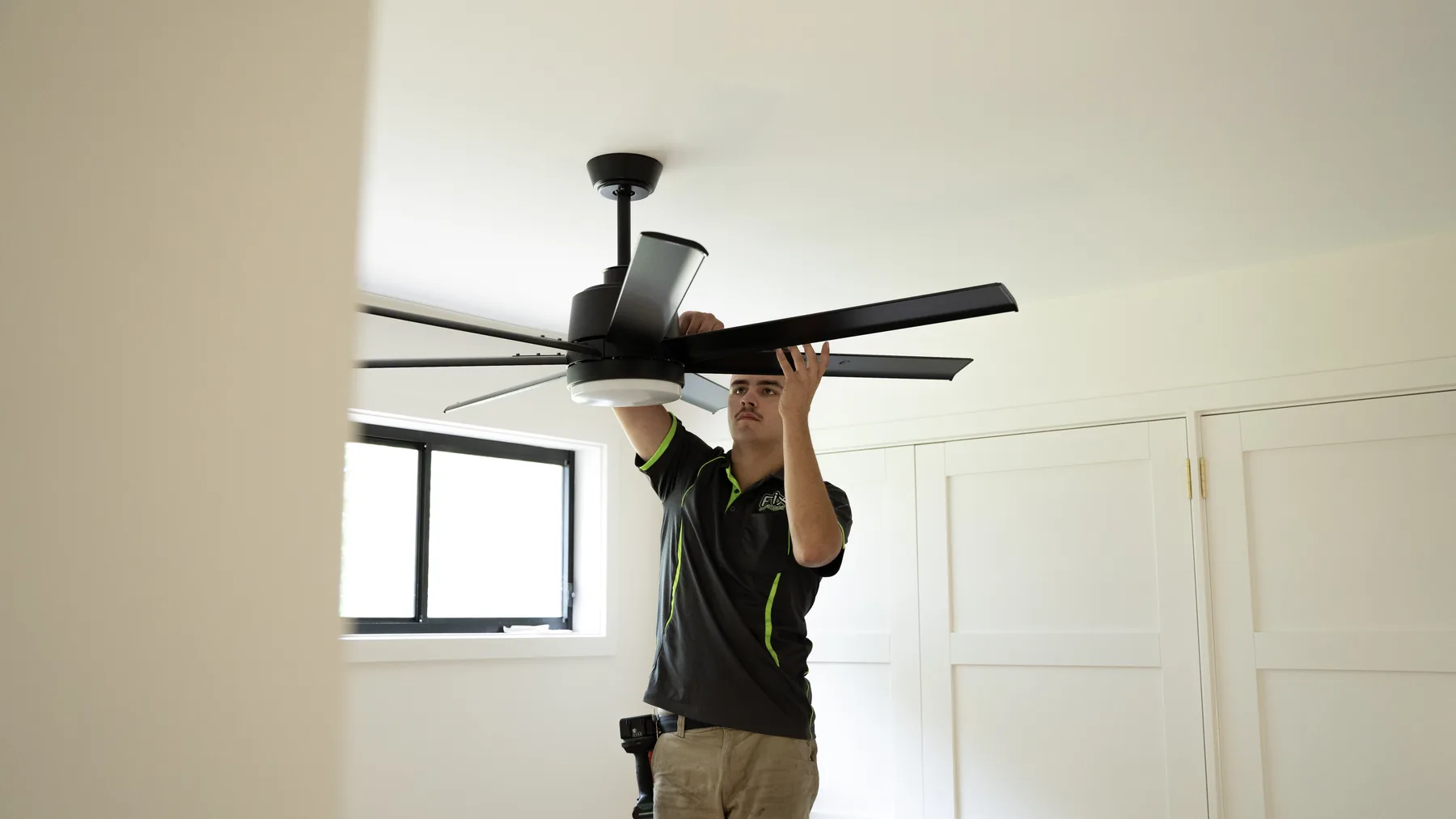
Ceiling fan installation, wired properly
New fans, replacements and upgrades — indoors, or rated for a patio. In NSW this is licensed electrical work, and we hand you the compliance certificate to prove it was done right.
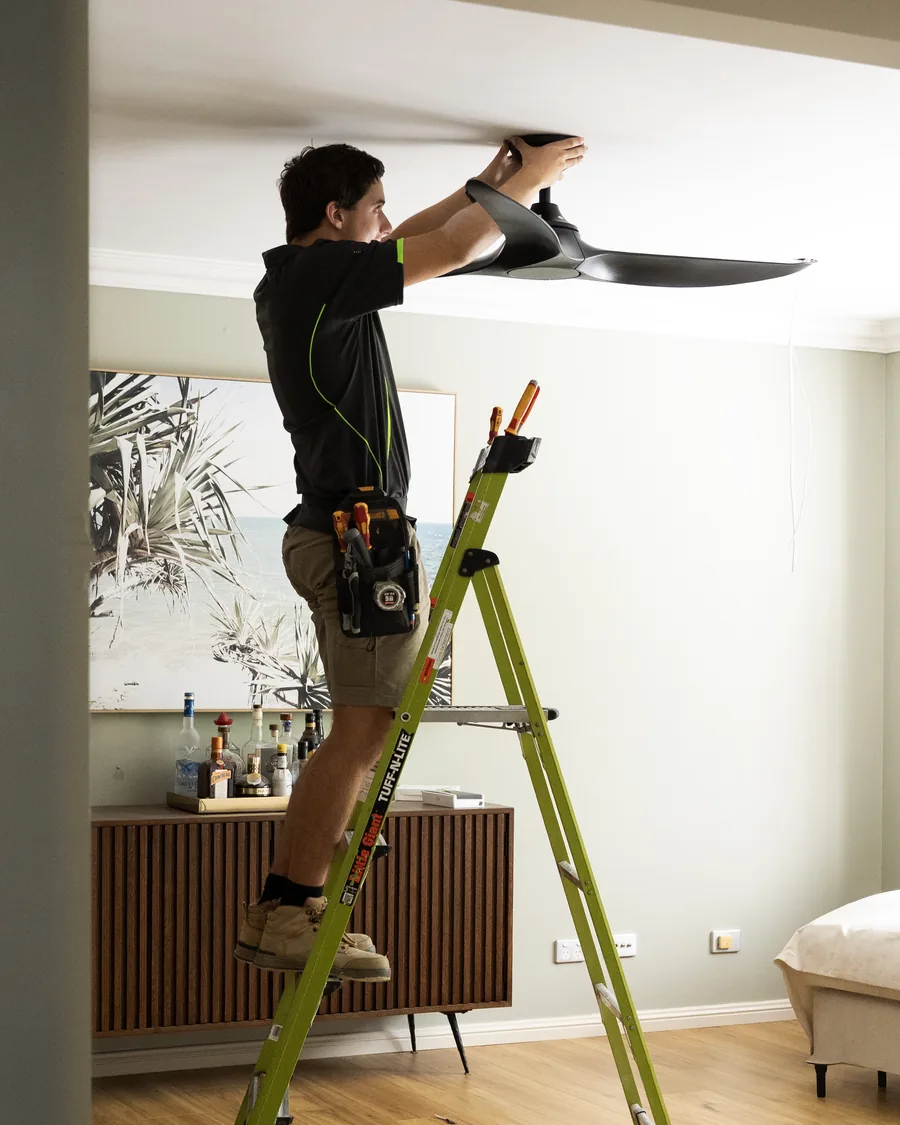
Fan installation is licensed work in NSW
Installing a ceiling fan is electrical work, and under NSW law most electrical work must be carried out by a licensed electrician. It means working with wiring at height, on a fitting that then spins above people's heads.
A licensed electrician installs it to the relevant Australian Standards and issues a Certificate of Compliance for Electrical Work — the CCEW — which is a legal requirement, not an optional extra.
- Every install comes with a CCEW
- We advise on room size, ceiling height and clearances first
- New installs, replacements and repairs to existing fans
Fans for every room and ceiling
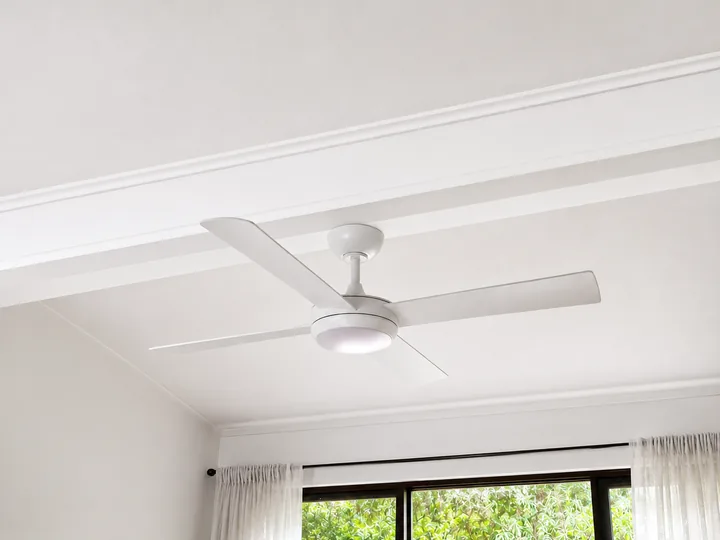
New Fan Installation
Supply and install, including running the wiring and switching where a room has never had a fan.
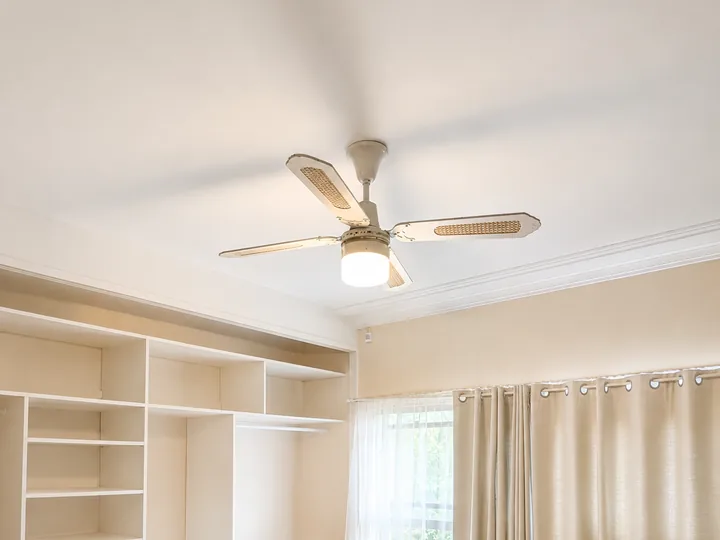
Replace or Upgrade
Swap an old, noisy or failed fan for a modern DC motor unit on the existing point.
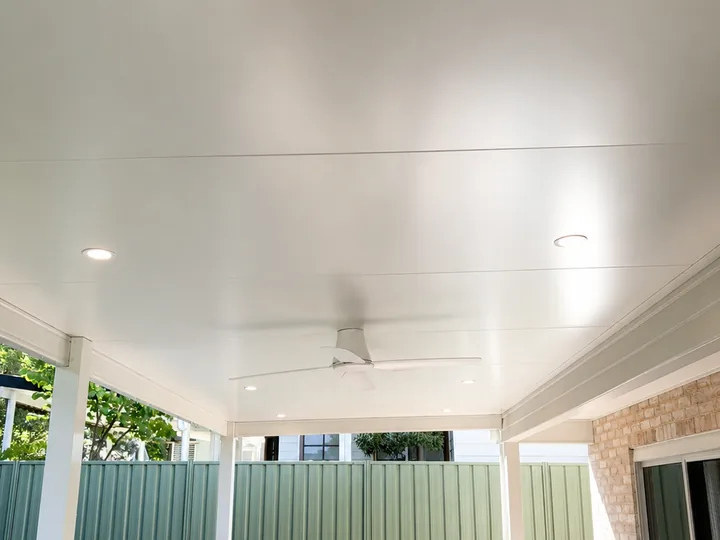
Outdoor & Patio Fans
Covered decks and patios need a fan rated for damp or wet conditions. We fit the right one.
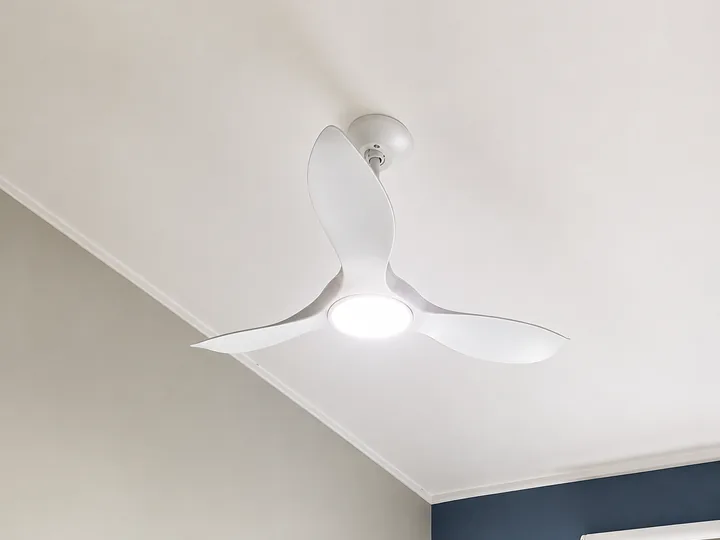
Sloped Ceilings
Raked and cathedral ceilings need an angled mounting adapter to hang the fan true.
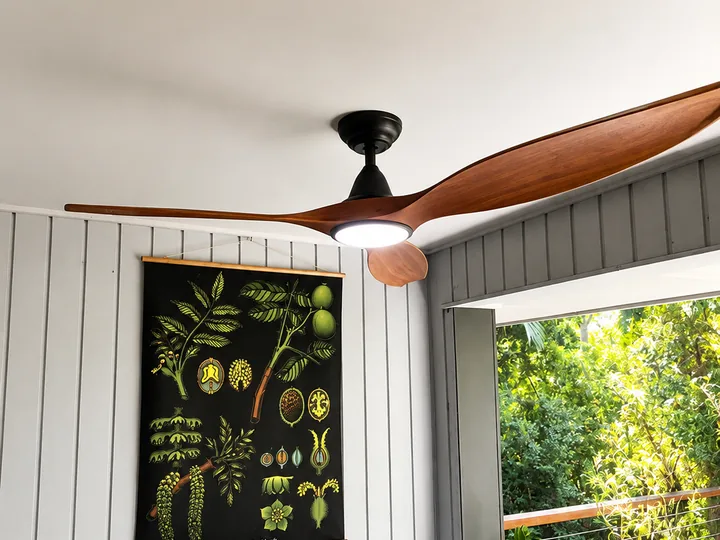
Fans with Lights
Combined fan and light fittings, wired so the fan and the light switch independently.
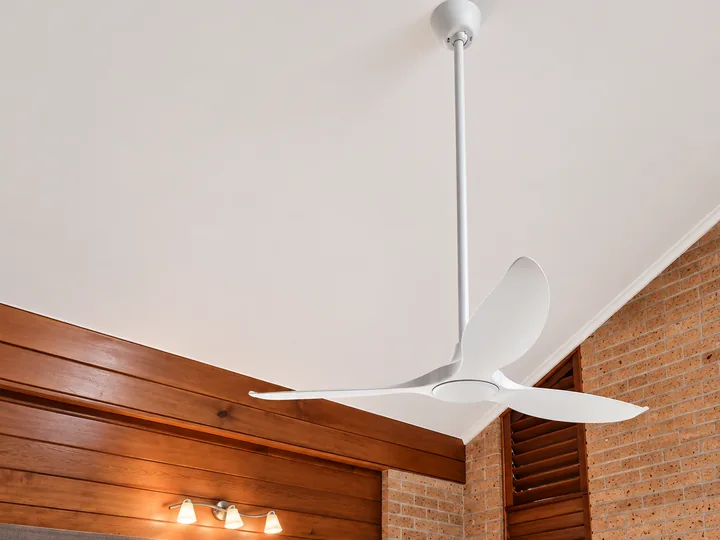
Downrods & Low Profile
A downrod brings a fan down from a high ceiling; a flush mount keeps a low one safe.
Will a fan actually work in your room?
Four things decide it, and it is worth knowing before the fan arrives.
Ceiling height
Blades want to sit 2.1–2.7 m off the floor. Very low ceilings need a flush-mount fan or none at all.
Room size
The room has to be big enough for the blades to turn unobstructed, with clearance to the walls.
Structural support
The ceiling has to carry the fan's weight and its vibration — not just its static load.
Wiring and mounting point
There needs to be a point rated to support a moving fixture, not just a light fitting.
Cheaper to run than the air conditioner
Moving air can make a room feel up to 3°C cooler, which cuts how hard the air conditioner has to work and what it costs to run. In winter, reversing the fan pushes the warm air that has collected at the ceiling back down into the room.
A fan is one of the cheapest comfort upgrades in a house, and it keeps working for years with almost no maintenance.
Air movement can make a room feel up to 3°C cooler.
From choosing the fan to first spin
Pick the Right Fan
We talk through room size, ceiling height and whether the space needs an outdoor-rated fan.
Check the Ceiling
Mounting point, structural support and clearances, plus what wiring and switching is already there.
Mount & Wire
Fan mounted securely, wired and switched, with a downrod or angled adapter if the ceiling needs one.
Test & Certify
Balanced, tested on every speed, site cleaned, and your CCEW issued.
Trusted by Sydney customers
Arrived on time, Dave completed the installation of some light fittings, cleaned up afterwards and did an excellent job. Very happy.
Great team, always responsive. Quality work and reasonably priced!
Fix electrical has quality workmanship and turns up on time! All the tradesmen polite, care and deliver on time. Highly recommend if you're in the Blue Mountains or Western Sydney area!
Serving all of Sydney
Our electricians operate across the entire Greater Sydney region — no job is too far.
Ceiling fan questions
Do I need an electrician to install a ceiling fan, or can I do it myself?
You need a licensed electrician. In NSW installing a ceiling fan is electrical work, and most electrical work must legally be done by a licensed electrician. They also issue the Certificate of Compliance for Electrical Work that the law requires.
Can I have a ceiling fan without wiring?
No. All modern ceiling fans run on mains wiring, so there has to be a suitable, correctly rated point to connect to.
Are ceiling fans expensive to run?
No — compared with a standard home air conditioner, a ceiling fan's running cost is very low. Used well it reduces how much you need the air conditioner at all, in both summer and winter.
How far from the floor should a ceiling fan be?
As a general guide, blades 2.1–2.7 m from the floor, at least 200 mm between the blades and the ceiling, and around 450 mm clearance to the walls. High ceilings want a downrod, low ceilings a flush-mount fan. Always follow the manufacturer's instructions for the specific fan.
Can a ceiling fan go in any room?
Not always. Ceiling height, room size, existing ceiling fixtures, structural support and the ceiling type all matter, and sloped ceilings need an angled adapter. Some apartments and heritage buildings also restrict this kind of modification.
Related electrical services
Lighting & LED
Downlights, LED upgrades and feature lighting for the same rooms.
View lightingResidential Electrician
Repairs, rewiring and safety checks for homes across Western Sydney.
View residentialPower & Powerpoints
Extra circuits and powerpoints, safety switches and fault finding.
View power services
Want a fan put in properly?
Book a free, no-obligation quote and we will check the room, recommend the right fan and give you upfront pricing.